Calm Your Mind: Guided Audio Meditations for Anxiety
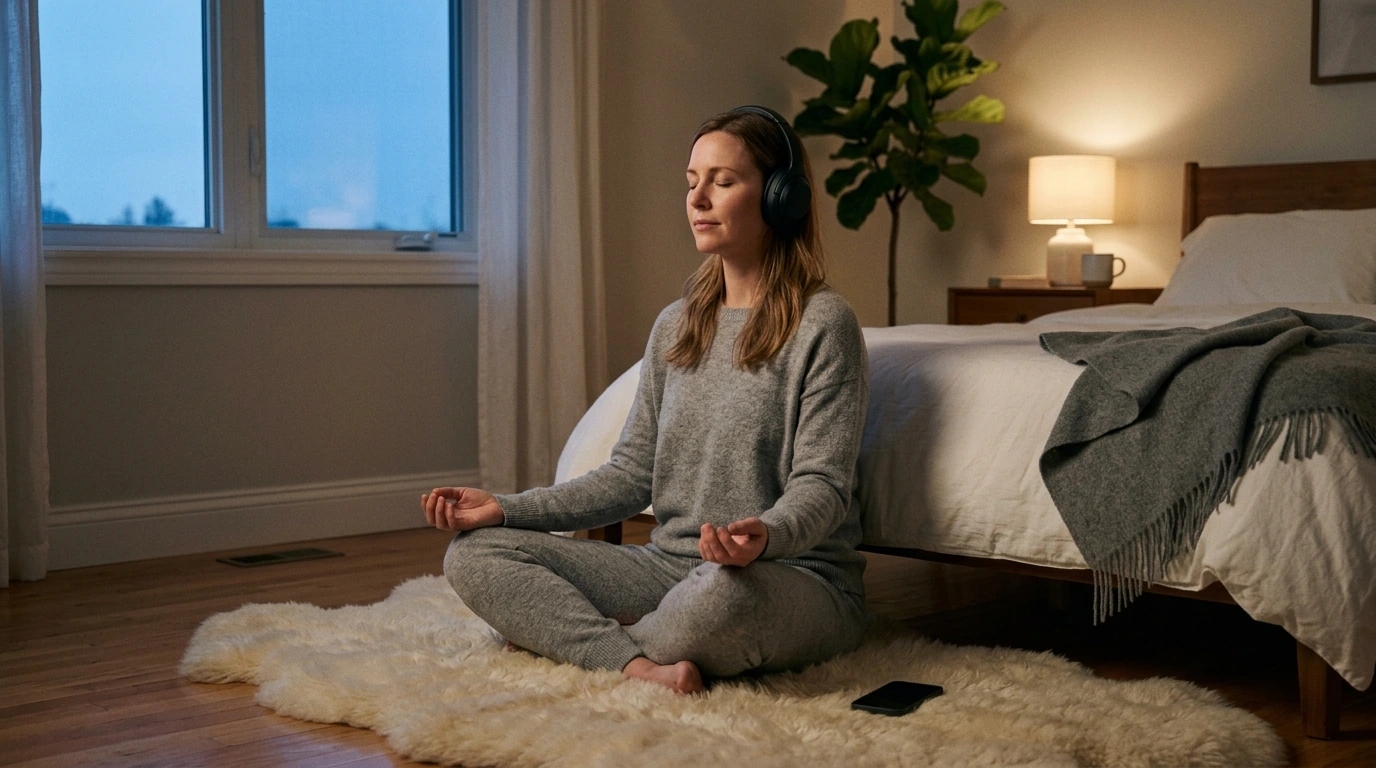
Calm Your Mind: Guided Meditation Series (Audio Course) for Anxiety Relief
Calm Your Mind is a guided audio meditation series designed to help quiet racing thoughts, ease stress responses, and build a steadier baseline through short, repeatable practices. Use it as a daily routine, an “in-the-moment” reset, or a wind-down tool when anxiety makes it hard to focus, relax, or sleep.
If you prefer a clear beginning and ending (instead of trying to “figure out meditation”), guided audio can make the first step feel simpler and more doable. For a structured starting point, explore Calm Your Mind: Guided Meditation Series (Audio Course).
What this guided series helps with
- Settling mental noise when thoughts feel stuck on a loop
- Downshifting from tension and overwhelm into a calmer body state
- Building consistency with simple guided steps rather than guessing what to do
- Creating a reliable pause between triggers and reactions
- Supporting better transitions: work-to-home, pre-sleep, post-conflict, or before stressful events
Rather than chasing a “perfectly calm” mind, the aim is to practice returning—back to breath, back to the body, back to the present moment—so stress doesn’t automatically run the show.
How guided audio meditation works (and why it can feel easier than doing it alone)
- A steady voice and structure reduce the effort of deciding what to focus on
- Guidance helps redirect attention gently when the mind wanders—normal during anxiety
- Breath cues and body awareness can activate relaxation pathways and lower perceived stress
- Repeatable sessions create familiarity, making calm feel more accessible over time
Mindfulness and meditation practices are widely discussed in clinical and research settings as supportive tools for stress and well-being. For an evidence-informed overview, see resources from the National Center for Complementary and Integrative Health (NCCIH) and the American Psychological Association (APA).
A simple 7-day routine to get started
- Choose a consistent time (morning reset, midday break, or bedtime wind-down)
- Start small: one session per day, even if attention feels scattered
- Use the same session for 2–3 days before switching to build confidence
- Keep expectations practical: the goal is steadiness, not a perfectly blank mind
- Track one metric only (sleep onset, tension level, or frequency of spiraling thoughts)
7-day practice plan (adjust to your schedule)
| Day | When to listen | Focus | Quick note to self |
|---|---|---|---|
| 1 | Evening | Downshift and exhale longer | Notice one place tension softens |
| 2 | Morning | Settle the mind before inputs | Pick one calm intention |
| 3 | Midday | Reset the stress cycle | Return to breath 3 times |
| 4 | Evening | Body scan for release | Soften jaw/shoulders |
| 5 | Morning | Grounding and focus | Name 3 present sensations |
| 6 | Midday | Interrupt rumination | Label thoughts as “thinking” |
| 7 | Evening | Wind-down for sleep | Let the day end on purpose |
When to use the sessions for the biggest payoff
- Before a stressful moment: presentations, appointments, hard conversations
- After a spike: when the body is buzzing and the mind is catastrophizing
- During transitions: commuting, closing the laptop, shifting into parenting time
- At bedtime: when worry delays sleep or causes repeated checking and replaying
- As a daily anchor: a short practice that keeps stress from stacking all day
One of the best “hidden wins” is learning your earliest signs of escalation—tight jaw, shallow breathing, mental urgency—so you can intervene sooner, not later.
Who it’s best for (and how to adapt if anxiety is intense)
- Best fit: people who prefer guidance, structure, and a clear start/finish
- Helpful for beginners who feel unsure whether they’re “doing meditation right”
- If anxiety is intense: keep sessions shorter, practice with eyes open, and use grounding (feet on floor, notice sounds)
- If you feel activated: switch to breath counting or a simple body scan rather than visualization
- If symptoms are severe or persistent: use meditation as a support, not a replacement for professional care
It can also help to choose a posture that feels safe—seated with back support, or lying down with knees bent—so the body isn’t fighting the practice.
Practical tips to make the habit stick
How this fits alongside other quick-support tools
- For parents with limited time, a shorter reset practice can complement longer guided sessions on tougher days. Consider 5-Minute Reset for Exhausted Parents (3 in 1) (Audio Course) for fast, repeatable support.
- For relationship stress, boundary and self-check tools can pair well with meditation to reduce impulsive reactions. Try Mindful Dating Red-Flag Checklist (Printable) as a practical reflection aid.
- For ongoing learning and reflection at home, reading-based resources can reinforce calm skills and emotional vocabulary. Explore Educational Storybook for Growing Minds (Kids eBook) for gentle, lesson-based stories.
What to expect over the first month
FAQ
How often should guided meditation be used for anxiety relief?
Daily is ideal, even if it’s brief, because consistency trains your nervous system to recognize calm more quickly. Add extra “as-needed” listens during stress spikes, but prioritize repetition over session length.
What if meditation makes anxiety feel worse at first?
That can happen when slowing down makes you more aware of body sensations or thoughts you usually push aside. Try shorter sessions, practice with eyes open, and use grounding (feet on the floor, noticing sounds); if distress increases or feels unmanageable, pause and seek professional support.
Can this be used before sleep?
Yes—wind-down sessions can reduce mental and physical arousal so sleep feels more accessible. Listen in bed at a low volume and avoid multitasking so your brain gets a clear “it’s time to power down” signal.











Leave a comment